Part 2: The Rainy Morning That Changed Everything
Valeria reached the tram stop in Seville with one hand gripping Lucía’s tiny fingers and the other pressed against the broken umbrella that kept folding under the wind. Her shoes were soaked through, her blouse clung to her back, and every passing minute sounded like a sentence being read aloud.
Lucía did not cry. That made it worse.
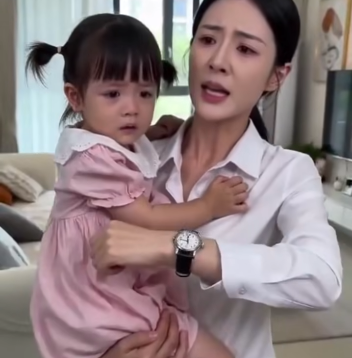
The little girl looked up at her mother with wide grey eyes and whispered, “Mamá, did grandma leave because of me?”
Valeria stopped breathing for one painful second. The tram lights appeared in the distance, yellow and blurred through the rain.
“No, my love,” she said, crouching in front of her despite the puddles soaking her knees. “Adults make ugly choices because of what is broken inside them, not because of children.”
Lucía nodded, but she did not look convinced.
By the time Valeria arrived at the office, her hair was loose, Lucía’s coat was damp, and the receptionist looked at her like she had dragged disaster through the glass doors. The accounting firm smelled of coffee, printer ink, and quiet judgment.
Her manager, Ignacio Ferrer, stepped out of his office before she could explain.
“You are forty-two minutes late.”
“I know,” Valeria said, breathless. “My childcare fell through. It won’t happen again. Please, Ignacio, I need this job.”
Lucía hid behind her mother’s leg.
Ignacio looked at the child, then at Valeria. His face softened for half a second before the hardness returned.
“The Madrid auditors are here today. I warned you.”
Valeria felt the room tilt.
“I can stay late. I’ll do anything.”
“You said that last time.”
The words landed with no anger, only exhaustion. That was what frightened her most. Anger could be argued with. Exhaustion had already decided.
Then a woman’s voice spoke from behind him.
“Let her bring the child into my office.”
Everyone turned.
A tall older woman in a charcoal suit stood near the conference room door. She had silver hair pinned neatly at the nape of her neck and eyes that seemed to measure truth faster than words.
Ignacio straightened. “Doña Beatriz, that’s not necessary.”
“It is if you want the quarterly reconciliation finished before noon.” She looked at Valeria. “You are Valeria Martín?”
“Yes.”
“I reviewed your work last night. You found three errors my own team missed.” Beatriz held out her hand to Lucía. “And you must be the very serious assistant.”
Lucía blinked. “I can color quietly.”
“Excellent. That makes you more qualified than half the men I worked with in Barcelona.”
A nervous laugh moved through the office.
Valeria could barely speak. “Thank you. I swear I won’t let this affect my work.”
Beatriz leaned closer, lowering her voice. “Do not swear to survive. Work like someone is watching for the right reason.”
For the next six hours, Valeria worked as if her fingers were holding the roof above her daughter’s head. She corrected ledgers, traced missing invoices, and uncovered a payment that had been filed under the wrong supplier code. Lucía sat in Beatriz’s office with colored pencils, drawing a small house under a yellow sun.
At lunch, Valeria’s phone vibrated.
It was Elena.
First one call. Then three. Then six.
Valeria stared at the screen until it went dark.
A message appeared.
Open the door. I am outside your building. I have nowhere to go.
Valeria’s chest tightened. For a moment, she saw her mother alone in the rain, humiliated by the son she had worshipped.
Then she remembered Lucía’s question at the tram stop.
Did grandma leave because of me?
Valeria turned the phone face down.
At five, Ignacio called her into his office. Beatriz was there too.
Valeria prepared herself for the dismissal.
Instead, Ignacio slid a document across the desk.
“Doña Beatriz recommended you for the senior audit project in Madrid. Temporary contract first. Better pay. Longer hours, but more stability.”
Valeria stared at the paper.
Beatriz folded her hands. “There is one condition. You stop apologizing for being poor, tired, and responsible. None of those are crimes.”
Valeria’s eyes burned.
Before she could answer, shouting erupted near the lobby.
A familiar voice cut through the office walls.
“Where is my daughter? Tell Valeria her mother is here!”
Lucía dropped her pencil in the next room.
Valeria stood slowly.
Through the glass partition, she saw Elena dripping rain onto the polished floor, clutching a suitcase, her face twisted between panic and pride.
And then Elena screamed the words that froze everyone in place.
“She owes me a home! I gave birth to her!”
Part 3: The Mother Who Arrived With Nothing
Valeria walked into the lobby with her heart beating so hard she could hear it louder than the rain against the windows. Elena stood beside the security desk, soaked cardigan hanging from her shoulders, one wheel of her suitcase broken and scraping the marble whenever she shifted her weight.
For the first time in years, Elena looked old.
Not dignified. Not powerful. Just old.
“Mamá,” Valeria said quietly. “This is my workplace.”
Elena’s eyes darted to the employees watching from behind computer screens. She lifted her chin, trying to gather the same authority she had used in the small apartment that morning.
“Then tell them to stop staring. I am your mother.”
“You made that clear when you refused to help me.”
Elena’s mouth tightened. “I was angry.”
“No,” Valeria said. “You were honest.”
A murmur moved through the lobby. Ignacio stepped forward, but Beatriz raised one finger, stopping him.
Elena noticed the expensive suit, the silver hair, the calm authority. Her tone changed immediately.
“Señora, I apologize for the scene. My daughter is emotional. She has always been difficult.”
Valeria almost laughed.
There it was. The old knife in a polished handle.
Beatriz looked at Elena as if she were reading a poorly hidden invoice. “I have met many difficult women. They usually become difficult because someone has spent years trying to make obedience look like love.”
Elena flushed.
Valeria turned to the guard. “Please call her a taxi.”
“A taxi?” Elena snapped. “To where?”
“That is your decision.”
“I have no money. Your brother threw me out.”
The words slipped out before she could dress them in pride. The lobby went painfully quiet.
Valeria felt no joy. That surprised her. She had imagined karma would feel warm, like justice. Instead, it felt cold and heavy, like finding a body under snow.
Elena took a step closer. “Just for tonight. Let me stay tonight.”
Lucía appeared at Beatriz’s office door, clutching her drawing. Elena saw her and reached out.
“Lucía, come to grandma.”
The little girl stepped backward.
Elena’s hand froze in the air.
That tiny movement did more damage than any insult Valeria could have spoken.
“I can pay for a hostel for three nights,” Valeria said. “That is all.”
Elena stared at her. “A hostel? You would put your own mother in a hostel?”
“You put my daughter on the street this morning.”
Elena’s eyes filled, but even her tears looked angry. “I raised you.”
“You raised me to believe I had to earn kindness.”
“Valeria,” Elena whispered, voice trembling now, “please.”
For a moment, Valeria saw flashes of childhood: Elena brushing her hair before school, Elena singing softly while washing dishes, Elena staying awake with a feverish little girl in Córdoba years before bitterness had swallowed her whole. The memories hurt because they proved the woman before her had once known tenderness and had chosen not to keep it.
Valeria opened her bag, took out the small emergency envelope she had hidden behind old receipts, and removed eighty euros.
Elena looked insulted.
“That is all I can spare.”
“You got a better position today. I heard them.”
Valeria froze.
Elena’s expression changed. Hunger entered her eyes. Not hunger for food. Hunger for access.
“You see? God is telling you to forgive me.”
“No,” Valeria said. “God is showing me why I needed boundaries.”
Elena’s face hardened instantly.
She snatched the money.
“Your father would be ashamed of you.”
Valeria’s breath caught.
Beatriz’s eyes sharpened.
Elena dragged the broken suitcase toward the door, but before leaving, she turned with a cruel smile that looked almost desperate.
“You think you are strong now because strangers clap for you? Wait until you learn what your father really left behind. Then we will see who has a home.”
The door slid open. Rain swallowed her.
Valeria remained still.
Beatriz stepped beside her. “What did she mean by that?”
Valeria shook her head. “My father died with debts. There was nothing.”
Beatriz looked toward the wet footprints Elena had left on the marble.
“People with nothing do not threaten inheritance secrets in public.”
That night, Valeria found Lucía’s drawing folded inside her work folder. It showed three people standing outside a yellow house.
At the bottom, in uneven letters, Lucía had written:
A house where nobody has to beg.
Part 4: The Envelope Hidden Behind The Wall
The hostel called at 2:13 in the morning.
Valeria woke to the vibration of her phone against the wooden crate she used as a bedside table. For one confused second, she thought it was her alarm and reached out blindly, afraid of another late morning, another disaster.
Then she saw the unknown number.
“Señora Martín?” a man asked. “Your mother gave us your contact. She has been asked to leave.”
Valeria sat up slowly. The apartment was dark except for the weak orange glow of the streetlamp cutting through the curtains.
“What happened?”
“She accused another guest of stealing her bracelet. Then we checked the cameras and saw her hiding it in her own coat pocket.”
Valeria closed her eyes.
Of course.
“She says she will sleep outside unless you come.”
A sound escaped Valeria that was not quite laughter.
On the mattress beside her, Lucía stirred. “Mamá?”
“Sleep, cariño.”
Valeria walked into the kitchen and lowered her voice. “I paid for three nights. If she broke the rules, that is between her and you.”
“She is elderly.”
“She is also responsible for herself.”
The man hesitated. “She said you would say that.”
Valeria’s hand tightened around the phone.
Then Elena’s voice burst through the line, distant and furious. “Valeria! Don’t you dare abandon me!”
Valeria ended the call.
Her hand shook so badly she had to place the phone on the counter.
She expected guilt to arrive like a wave. Instead, something stranger came: grief for the daughter she had been, the one who would have run through the night to rescue a woman who had never learned to stay rescued.
The next morning, Valeria took Lucía to a neighbor, then went to her old childhood home in Córdoba during her lunch break from remote audit work. The building had been sold years earlier, or so Elena had always claimed. But after her mother’s threat, Valeria could not stop thinking about the narrow pantry wall where her father, Andrés, used to hide Christmas gifts.
The current owner, a retired teacher named Sofía Llorente, opened the door with suspicion until Valeria showed an old family photograph.
“I only need ten minutes,” Valeria said. “There may be something behind the pantry panel.”
Sofía studied her face, then stepped aside.
The house smelled different now: lavender soap, old books, lemon polish. Yet the hallway still made Valeria feel eight years old.
In the pantry, she pressed the wooden trim exactly where Andrés had taught her. Nothing happened.
For a moment, she felt foolish.
Then Sofía handed her a butter knife.
“Old houses like stubborn hands.”
Valeria slid the blade into the crack and pushed.
The panel opened with a soft pop.
Inside was dust, a dead spider, and a brown envelope wrapped in oilcloth.
Her name was written across it in her father’s careful handwriting.
Valeria sat on the pantry floor.
Sofía whispered, “Should I leave you?”
Valeria could only nod.
Inside the envelope were three things: a letter, a key, and a notarized document.
My Valeria,
If you are reading this, it means your mother did not give you what I left. Forgive me for trusting blood without proof. I purchased the small house in Carmona for you and any child you might one day have. I placed it in a protected deed because I feared your mother would sell it for Mateo. She knows where the papers are, but she does not own it. You do.
Valeria covered her mouth.
Her father had not died with nothing.
Her mother had lied.
The key was brass, old, and heavier than it looked.
The document named Valeria as sole beneficiary of a property on Calle de la Luna, Carmona.
At the bottom was another line, written later in different ink:
If Elena attempts to contest this, contact Beatriz Alarcón, notary and executor.
Valeria stared at the name until her skin prickled.
Beatriz.
The woman from the office.
That evening, Valeria returned to Seville with the envelope hidden beneath Lucía’s spare sweater. She did not call Elena. She did not call Mateo.
She called Beatriz.
The older woman answered on the second ring.
“I wondered when you would find it,” Beatriz said.
Valeria stood in the kitchen, the brass key in her palm.
“You knew?”
“I knew your father. And I knew your mother would bury the truth until hunger dug it up.”
Before Valeria could respond, someone pounded on her apartment door.
Not knocked.
Pounded.
Lucía ran from the bedroom, frightened.
A man’s voice shouted from the hallway.
“Valeria, open the door. We need to talk about our father’s house.”
Mateo had come.
Part 5: The Brother Who Wanted Her Key
Valeria slid the chain lock into place before opening the door three inches. Mateo stood in the hallway wearing a navy wool coat too expensive for the peeling walls around him. His hair was damp from the mist, his jaw clenched, his eyes sharp with the same entitlement Elena carried like a family heirloom.
Behind him stood Elena.
She looked smaller than the night before, but the moment she saw Valeria, her spine straightened with familiar venom.
“So it is true,” Elena said. “You found it.”
Valeria kept one hand behind the door, clutching the brass key until it marked her palm.
Mateo leaned closer. “Open the door. We are not discussing family matters in a hallway.”
“There is no family matter.”
He laughed once, dry and ugly. “You think because a dead man wrote your name on paper, you can steal from the rest of us?”
Lucía appeared behind Valeria, and Mateo’s expression shifted into performance.
“Lucía, tell your mother family shares.”
Valeria shut the door halfway, blocking his view. “Do not speak to my daughter.”
Elena hissed, “You have poisoned that child against us.”
“No,” Valeria said. “You did that in one morning.”
Mateo lowered his voice. “Listen carefully. My business is under review. I need collateral for a loan. The Carmona house solves everything.”
Valeria felt the pieces click into place.
“Your business? Or your debts?”
His face darkened.
Elena grabbed his arm. “Do not answer her.”
Valeria’s stomach turned. “That is why you threw her out. Not because you didn’t need childcare. Because you knew she had no house to offer you anymore.”
Mateo’s silence was confession enough.
Elena’s eyes flickered.
Then Mateo placed his palm flat against the door and pushed. The chain snapped tight.
Valeria stepped back, heart racing.
“Open it,” he said softly. “Do not make this humiliating.”
Valeria reached for her phone.
Mateo saw.
His hand shot through the gap, knocking the phone from her grip. It hit the floor and skidded under the radiator.
Lucía screamed.
Something inside Valeria went still.
Not calm. Sharper than calm.
She looked at Mateo through the narrow opening and said, “If you force this door, you will lose more than a house.”
A neighbor’s door opened.
Old Señor Vidal from 2B stepped into the hallway with a walking cane and a face like carved stone.
“Problem, Valeria?”
Mateo withdrew his hand immediately.
Elena turned sweet. “No problem. Family disagreement.”
Señor Vidal looked at the broken chain, then at Lucía crying behind Valeria.
“I heard threats.”
Mateo smiled. “You heard emotion.”
“I heard a man frightening a child.”
Another door opened. Then another.
The hallway filled with witnesses in slippers and robes, the quiet army of people who heard everything through thin walls but usually pretended not to.
Mateo stepped back, humiliated.
Elena whispered, “Valeria, please. Let us discuss this tomorrow with dignity.”
Valeria picked up her phone, screen cracked but working.
“Tomorrow we discuss it with a lawyer.”
Mateo’s mask fell.
“You ungrateful little—”
Señor Vidal lifted his cane. “Finish that sentence and I will remember every word for the police.”
Mateo turned and walked away first. Elena lingered.
For one second, something like fear crossed her face.
“Valeria,” she whispered. “You do not understand what your father did.”
“What he did was protect me from you.”
Elena shook her head slowly. “No. He protected you from Mateo.”
Then she left.
Valeria locked the damaged door with a chair under the handle and spent the night sitting awake beside Lucía’s bed.
At dawn, Beatriz arrived with two coffees, a locksmith, and a folder stamped with the seal of a legal office in Seville.
“You need to see the property before they make their next move,” Beatriz said.
“What next move?”
Beatriz opened the folder.
Inside was a notice filed that morning by Mateo’s lawyer.
He was claiming Valeria had manipulated Elena and stolen family assets from a vulnerable elderly woman.
Valeria read the accusation twice before the words blurred.
At the bottom, Mateo had requested emergency suspension of the deed transfer.
Beatriz’s voice was low.
“He is not trying to win eventually. He is trying to freeze you until you are too poor to fight.”
Part 6: The House With Her Father’s Voice
Carmona sat under a pale winter sky, its whitewashed walls glowing softly above the Andalusian plain. Valeria had passed the town before on buses, never knowing that somewhere among its narrow streets waited a door her father had bought with years of quiet sacrifice.
Beatriz drove. Lucía sat in the back with her drawing notebook, unusually silent.
The house on Calle de la Luna was not grand. It had a blue door, iron window bars, terracotta roof tiles, and a lemon tree leaning over the small courtyard wall. But when Valeria placed the brass key in the lock, her hand trembled as if she were opening a memory instead of a door.
The lock turned.
Inside, the air smelled of dust, wood, and closed summers. White sheets covered furniture. Sunlight entered through green shutters in thin golden lines. Lucía stepped in carefully, then looked around.
“Mamá,” she whispered, “it has a room for me.”
Valeria laughed through tears she had not approved.
Beatriz remained near the doorway. “Your father paid the taxes through a trust. Quietly. Every year.”
“How did my mother hide this?”
“Elena told you debts because debts make children stop asking.”
Valeria moved through the rooms slowly. A kitchen with blue tiles. A narrow staircase. A bedroom with an old wardrobe. In the courtyard, beneath the lemon tree, a stone bench waited in the sun.
On the bench sat a metal box.
It was not dusty.
Someone had been there recently.
Beatriz saw it too. Her face changed.
“Do not touch it yet.”
But Lucía had already noticed the envelope taped to the lid.
It had Valeria’s name on it.
Beatriz opened the box with gloved hands from her legal kit. Inside were cassette tapes, photographs, and a small recorder.
A note lay on top.
Valeria,
If Mateo comes for the house, play tape three before trusting anyone.
Her father’s handwriting again.
Valeria’s throat closed.
Beatriz inserted the cassette into the recorder. Static crackled. Then Andrés Martín’s voice filled the courtyard, older and weaker than Valeria remembered, but unmistakably his.
“Elena, I know about the withdrawals.”
Another voice answered sharply.
Elena.
“You are imagining things.”
“No. Mateo has taken money from the transport accounts. I have copies. If I report him, he may go to prison.”
Valeria’s hand flew to her mouth.
Her father continued, “I will not let him destroy Valeria’s future to cover his crimes.”
Elena’s voice broke. “He is our son.”
“And Valeria is our daughter.”
There was a long silence on the tape.
Then Elena said something so quietly Valeria had to lean closer.
“Girls survive with less.”
The recorder clicked.
Lucía looked up, confused by the adult pain around her.
Valeria walked to the lemon tree and pressed her forehead against the rough bark.
All those years, she had thought neglect was carelessness. It had been policy. A rule. A belief.
Girls survive with less.
Beatriz stopped the tape. “There is more.”
“No,” Valeria whispered. “Not in front of Lucía.”
At that moment, a car door slammed outside.
Mateo’s voice carried over the courtyard wall.
“I know you are in there!”
Beatriz grabbed the metal box.
Valeria pulled Lucía behind her.
Mateo appeared at the courtyard entrance with two men in suits and a locksmith.
“This property is under dispute,” he announced. “You cannot remove anything.”
Beatriz stepped forward. “I am the executor of the protected deed. Who are your companions?”
“My legal witnesses.”
One of the men would not meet her eyes.
The locksmith looked nervous.
Valeria suddenly understood.
“They are not witnesses,” she said. “They are here to change the locks.”
Mateo smiled. “Possession matters.”
Beatriz took out her phone. “So does criminal trespass.”
Mateo’s gaze dropped to the metal box.
His smile vanished.
“What is that?”
Valeria lifted her chin.
“Our father’s voice.”
Mateo lunged.
Part 7: The Tape That Broke The Favorite Son
The courtyard exploded into motion.
Mateo grabbed for the metal box, but Beatriz twisted away with surprising speed. The box struck the stone bench with a clang, tapes spilling across the ground like dark little secrets. Lucía cried out. Valeria stepped between her daughter and her brother just as Mateo’s hand closed around her sleeve.
“Give it to me,” he snarled.
Valeria shoved him back.
Not hard enough to hurt him. Hard enough to surprise him.
For the first time in her life, Mateo looked at her as if she were not furniture in the room of his needs.
“Do not touch me again,” she said.
One of the suited men backed toward the gate. The locksmith muttered, “I was told this was authorized.”
“It is not,” Beatriz snapped.
Mateo bent, snatched a cassette from the ground, and crushed it under his shoe.
Valeria saw the label.
Tape Two.
He had not destroyed Tape Three.
Beatriz saw it too.
She slid the small cassette into Valeria’s coat pocket while pretending to gather the others.
Police sirens wailed in the distance. Señor Vidal, standing outside the blue door with his cane and phone, had followed them after all.
Mateo heard the sirens and stepped back, breathing hard.
“You think a tape changes anything?” he said. “He is dead. Mother will testify that he was confused.”
A voice came from the doorway.
“No, I will not.”
Elena stood there, pale, shaking, hair uncombed beneath a black scarf. She looked as if the night had dragged her through every street between Seville and Carmona.
Mateo stared. “Mamá.”
Elena’s eyes moved to the broken cassette under his shoe.
Then to Valeria.
Then to Lucía hiding behind the lemon tree.
Something in her face cracked.
“I told myself I was protecting you,” Elena said to Mateo. “Every time you stole. Every time you lied. Every time your father begged me to stop choosing you over your sister.”
“Be quiet,” Mateo warned.
Elena flinched, and Valeria saw the truth: Mateo had not become cruel after growing up favored. He had learned cruelty from being worshipped without limits.
Beatriz pressed record on her phone.
Elena noticed and spoke louder.
“And when Andrés died, I hid the deed. I told Valeria there were debts. I let her struggle because I thought Mateo deserved the house more.” Her voice shook violently. “I did it because I loved my son badly and punished my daughter for surviving it.”
Mateo’s expression turned murderous.
“You stupid woman.”
The words hit Elena harder than any slap could have. Her shoulders folded inward.
Valeria expected to feel satisfaction. Instead, she felt Lucía’s small hand slide into hers.
Police entered the courtyard moments later. Questions flew. Mateo tried to regain control, speaking rapidly about legal disputes and emotional elderly mothers. But Beatriz played the recording from her phone, then produced the notarized deed, the executor documents, and the remaining tapes.
When an officer asked Elena whether she wished to make a statement, she looked at Mateo.
He did not look back at her.
He was too busy checking his own reflection in the dark window, smoothing his coat as if dignity could still be arranged from the outside.
“Yes,” Elena whispered. “I want to tell the truth.”
Mateo was not arrested that day for inheritance fraud alone. The tapes led to old company withdrawals, falsified signatures, and a loan scheme tied to his failing business in Málaga. By evening, his wife had called Beatriz asking whether the Carmona property could be separated from Mateo’s liabilities.
By night, Elena sat in Valeria’s kitchen in Seville, hands wrapped around a cup of tea she had not earned.
“I know I cannot ask to stay,” she said.
Valeria watched her mother’s fingers tremble.
“No. You cannot.”
Elena nodded as if each word cost her blood.
“I will go to a shelter.”
Lucía, sleepy in her pajamas, stood in the hallway listening.
Valeria hated that her daughter had seen so much ugliness. But maybe hiding ugliness was how families taught children to mistake silence for peace.
Elena rose to leave.
At the door, she turned.
“I am sorry, Valeria.”
Valeria waited for excuses. None came.
Elena swallowed. “Not because Mateo betrayed me. Not because I need you. I am sorry because you were my child, and I made you feel like an expense.”
Valeria’s eyes filled.
She did not hug her.
But she opened the drawer, took out the address of a women’s residence Beatriz had recommended, and placed it in Elena’s hand.
“This is not forgiveness,” Valeria said. “It is information.”
Elena accepted it like a sentence.
The next morning, Valeria returned to Carmona to begin cleaning the house.
On the kitchen table, where there had been nothing the day before, sat a sealed envelope with Lucía’s name written on it.
Inside was a bank card, a birth certificate copy, and one final note from Andrés.
For my granddaughter, if Valeria ever has one.
There is another account Elena never knew about.
Valeria looked at Beatriz.
Beatriz looked just as stunned.
Then Valeria read the final line and nearly dropped the paper.
Do not spend it until you find the woman in Granada who saved my life.
Part 8: The Woman In Granada Who Held The Final Key
Granada was cold enough to turn every breath white.
Valeria arrived with Beatriz and Lucía three days after finding the note, following an address written in her father’s hand and a bank reference that led not to a fortune, but to a locked charitable account under the name Fundación Luna Clara.
The address belonged to a modest music school near the Albaicín. Children’s violin notes floated crookedly through the courtyard. Orange trees held winter fruit like small lanterns against the grey morning.
A woman in a burgundy shawl opened the door.
She was in her seventies, with deep lines around her mouth and eyes that widened the moment she saw Valeria.
“You have Andrés’s face,” the woman whispered.
Valeria’s fingers tightened around the envelope.
“Are you Isabel Rojas?”
The woman nodded slowly. “I wondered whether he told you.”
“Told me what?”
Isabel stepped aside.
The school smelled of rosin, old wood, and cinnamon tea. In a small office, she removed a framed photograph from the wall. It showed Andrés much younger, standing beside Isabel and a group of children holding instruments.
“He came to Granada after discovering what Mateo had done,” Isabel said. “He was ill, frightened, and ashamed that his family had become a battlefield. He wanted to create something Mateo could never sell and Elena could never hide.”
Beatriz leaned forward. “The account?”
Isabel nodded. “A trust. Not for luxury. For mothers and children who are trapped by money, abandonment, or family control. He named Valeria as future director, but only if she came here by choice, not by pressure.”
Valeria felt the room move beneath her.
“I am not qualified to direct a foundation.”
Isabel smiled gently. “He said you would say that.”
Lucía wandered to a shelf of small instruments and touched a wooden flute with one careful finger.
Isabel opened a cabinet and removed a blue folder.
“Andrés left one condition before the funds could be released.”
Valeria almost laughed from exhaustion. “Another condition?”
“Yes.” Isabel’s eyes softened. “You had to refuse to give the Carmona house to Mateo.”
Silence filled the office.
Beatriz sat back slowly.
Valeria stared at the folder. “He knew?”
“He hoped he was wrong. But he built the test anyway.” Isabel’s voice lowered. “He said love without boundaries becomes a weapon in the hands of selfish people.”
The foundation account held enough money to restore the Carmona house, fund childcare for working mothers across Seville and Granada, and create emergency rooms for women and children with nowhere safe to sleep.
Valeria covered her mouth, overwhelmed.
Lucía turned from the shelf. “Mamá, does this mean other girls can have a house too?”
Valeria looked at her daughter, then at the winter light spilling over the floor.
“Yes,” she whispered. “That is exactly what it means.”
Months passed, but not quietly.
Mateo’s polished life collapsed in public filings, court notices, and whispered conversations outside cafés where he had once been admired. Elena gave testimony that sealed the case against him, then refused the small allowance his lawyer suggested she demand from Valeria.
Instead, she stayed at the women’s residence and learned, awkwardly and late, how to live without ruling anyone.
She wrote letters to Valeria every Sunday.
Valeria read them all.
She answered none for a long time.
Then one spring afternoon, at the opening of the restored Carmona house as the first Luna Clara family residence, Elena appeared at the gate wearing a plain grey dress and carrying no suitcase.
She did not enter.
She stood outside while mothers with children walked through the blue door, while Lucía handed out lemon biscuits in the courtyard, while Beatriz watched from the stone bench with tears shining behind her glasses.
Valeria saw Elena and walked to her.
Elena lowered her eyes. “I only came to see what your father wanted.”
Valeria looked back at the house. It was full of noise now: children laughing, women speaking, chairs moving, life returning to rooms once locked by lies.
“No,” Valeria said. “This is not only what he wanted.”
Elena nodded, accepting the correction.
Valeria reached into her bag and took out a key.
Elena’s breath caught.
“This is not for my house,” Valeria said. “It is for the storage room at the residence. They need someone to organize donations twice a week. Beatriz says you are very good at knowing where everything should go.”
Elena stared at the key as if it were too heavy to hold.
“You would trust me with that?”
Valeria’s voice trembled, but it did not break. “I trust supervision. I trust time. I trust actions more than tears.”
Elena closed her hand around the key and began to cry silently.
Lucía ran to the gate, crumbs on her dress, and looked from her mother to her grandmother.
“Are you coming in?” she asked.
Elena looked at Valeria first.
Valeria stepped aside.
Not wide enough to erase the past. Just enough to allow a different future to enter carefully.
Years later, people in Carmona would speak about the blue-doored house as if it had always belonged to women who needed a second beginning. They would not remember Mateo’s threats or Elena’s cruelty first. They would remember Valeria Martín, who arrived with a cracked phone, a frightened daughter, and a brass key her father had hidden from greed.
And whenever Lucía asked why the lemon tree in the courtyard was never cut down, Valeria would touch the bark and tell her the truth:
Because some roots survive the people who tried to bury them.
